
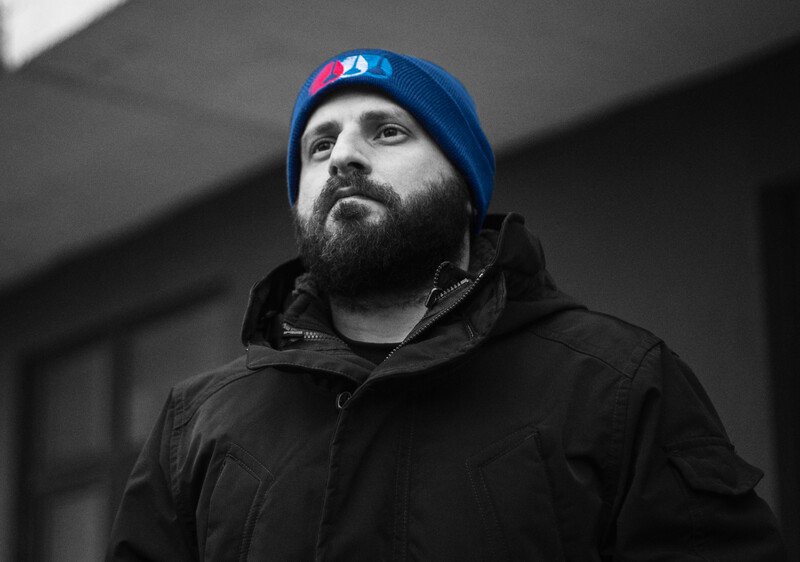
There exists a particular kind of cinema that strips away artifice until only raw human anxiety remains. Georgian director Giorgi Markozashvili’s The Burrow is precisely this kind of film—a claustrophobic psychological chamber piece that transforms the witness protection premise into something far more existentially unsettling.
The Architecture of Paranoia
From the fragmented transcript, one can sense the film’s deliberate disorientation. Markozashvili has crafted a narrative that seems to fold in upon itself, where dialogue fragments like shattered glass, reflecting the protagonist’s fractured sense of reality. The safe house becomes not a sanctuary but a prison of the mind, and the director masterfully exploits this spatial and psychological confinement.The cinematography—and here is where The Burrow truly transcends its modest premise—appears to employ a visual language of entrapment. One imagines tight frames, suffocating close-ups, the camera itself becoming an accomplice to the protagonist’s isolation. The Georgian cinema tradition of visual poetry meets the tension of a thriller, creating something that likely feels less like watching a genre exercise and more like experiencing someone’s slow unraveling.
Dialogue as Weapon
What strikes most profoundly in the available material is the weaponization of language. Characters circle each other with words that feel both mundane and menacing. “What do you want from me?” becomes a refrain, a mantra of desperation. The repetition itself—whether intentional or a byproduct of the transcription’s limitations—mirrors the psychological loops of someone trapped, repeating questions without answers, seeking exit routes that don’t exist.
The business negotiations scattered throughout suggest a parallel corruption: the literal witness protection mirrors a metaphorical protection racket. Trust becomes currency, and everyone’s ledger is suspect. When someone mentions “30% of the company,” we understand that survival itself has been commodified.
Direction: The Slow Burn of Dread
Markozashvili’s directorial hand seems deliberate in its restraint. This is not a film of explosive revelations but of accumulated dread. The mundane phone calls, the references to restaurants and family visits—these quotidian details become grotesque when filtered through the lens of surveillance and danger. Every ordinary interaction carries the weight of potential betrayal.
The film appears to understand that true paranoia isn’t about the monster in the shadows—it’s about the uncertainty of whether the shadows themselves can be trusted. Who is protecting whom? Who is the prisoner, and who is the guard?
A Festival Perspective
For Kyoto Cinematica, The Burrow represents the kind of international discovery the festival champions: formally adventurous, psychologically complex, and culturally specific yet universally resonant. Georgian cinema has long understood how political trauma manifests in intimate spaces, and this film continues that tradition while pushing it into new, more abstract territories.
The film’s greatest achievement may be its refusal of easy answers. In an era of narrative certainty, Markozashvili offers something more honest and more terrifying: the suggestion that safety is an illusion we construct because the alternative—acknowledging our fundamental vulnerability—is unbearable.
The Burrow doesn’t just show us a woman in hiding. It makes us understand, viscerally, what it means to live in a world where every voice might be a threat, every promise might be a lie, and the only certainty is uncertainty itself.
A haunting excavation of trust and survival that lingers long after the final frame.
When Love Must Be Relearned Each Dawn: Kim Hye-young’s Meditation on Memory and Impermanence
Kim Hye-young’s 2025 South Korean romance “Even If This Love Disappears from the World Tonight”…

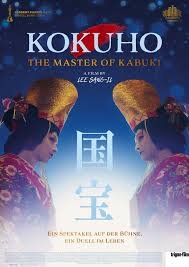
Living Art: How “Kokuho” Chronicles the Making of a Master
Living Art: How “Kokuho” Chronicles the Making of a Master The Phantom Behind the Paint:…
ei- yu- tsua: THE BURROW
Kyoto Cinematica Film Festival ReviewTHE BURROW: A Meditation on Captivity and Trust My story of…