
Directed by Ryûichi Hiroki | Netflix, 2021 | 142 minutes
Reviewed by 佐藤 光 Hikari Sato
“A film that asks how far love can stretch before it becomes something unrecognisable — and has the courage not to look away.”
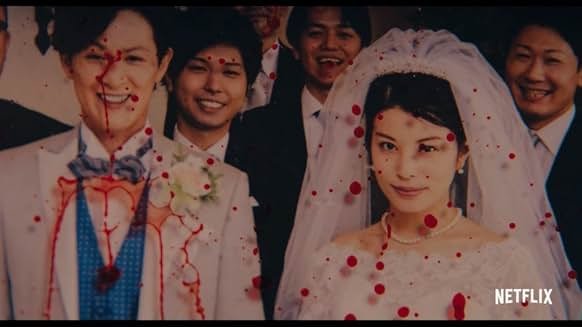
I’ll be honest with you — I wasn’t prepared for this one.
I sat down expecting a slick Japanese crime thriller, something with chase sequences and moral tidiness. What Ryûichi Hiroki delivered instead was one of the most emotionally destabilising films I’ve watched this year. By the time the credits rolled, I needed to just sit in the dark for a while.
The premise alone is arresting. Rei Nagasawa, played with extraordinary intensity by Kiko Mizuhara, is a successful plastic surgeon who discovers her former high school crush, Nanae, is being brutally abused by her husband. So she does what any rational person would do. She seduces him. And then she kills him. Within the first fifteen minutes, we’re already accomplices.What unfolds after that murder is where Hiroki truly reveals his hand. This isn’t a thriller. It’s a love story — messy, obsessive, and achingly unresolved. The two women go on the run together, and in that fugitive intimacy, years of buried feeling begin to surface between them. Rei has been in love with Nanae for over a decade. Nanae doesn’t know what she feels about anything anymore. Watching those two realities collide is genuinely uncomfortable viewing — and I mean that as the highest compliment.
Mizuhara is the beating heart of this film. I’ve admired her in other work but nothing quite like this. She carries Rei’s impossible contradiction — the cold calculation of a killer alongside a love so desperate it borders on self-destruction — without ever letting either quality swallow the other. There are scenes where she simply breaks apart, weeping in ways that feel intrusive to witness. It’s a performance you don’t forget easily. Honami Sato as Nanae holds her own beautifully too, playing a woman so fractured by trauma that even her own desires feel foreign to her.
Hiroki, a director with a long track record of telling women’s stories with genuine sensitivity, brings real craft to the screen here. The cinematography by Tadashi Kuwabara is stunning — long, unhurried takes, gliding camera movements, extreme close-ups during intimate scenes that feel almost unbearably tender. And the soundtrack choices are inspired. Hearing The Cardigans’ “Lovefool” drifting over a late-night drive between two fugitives carries a kind of heartbreak that no original score could manufacture.
Now, I won’t pretend the film is flawless. At two hours and twenty-two minutes, it demands your patience. The thriller tension of the opening act gradually gives way to something more introspective, and there are stretches in the second half where the pacing loses its grip. A few emotional pivots between the characters feel underwritten — I occasionally wanted the script to do a little more heavy lifting.
But here’s the thing. The risks Hiroki takes with this material are real. This is a frank, unflinching portrayal of queer desire in Japanese cinema — something that remains far rarer than it should be. There are no stereotypes here, no neat redemption arcs, no comfortable conclusions about who these women are or what they deserve. The film sits with its moral ambiguity and dares you to do the same.
The ending, which I won’t spoil, is one of the most quietly gutting things I’ve seen in recent memory. It doesn’t offer resolution. It offers truth. And sometimes that’s the braver choice.
Ride or Die is not an easy watch. But it is an essential one — bold, beautiful, and unapologetically human.
Ryûichi Hiroki’s Vision in Ride or Die — A Director’s Perspective
A Director Who Trusts His Women
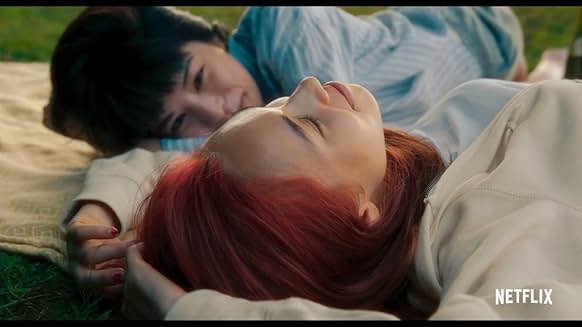
Ryûichi Hiroki has spent decades doing something that surprisingly few directors bother to do well — he listens to women. His filmography reads like a sustained, career-long commitment to exploring female desire, female pain, and female agency with a sincerity that never tips into exploitation. With Ride or Die, he didn’t abandon that vision. He pushed it further than he ever had before.
From the very first frame, you can feel Hiroki making a deliberate choice about whose story this is and how it will be told. This is not a film about a murder. It is a film about what lives inside two women that the rest of the world never bothered to ask about.
Violence as an Act of Love
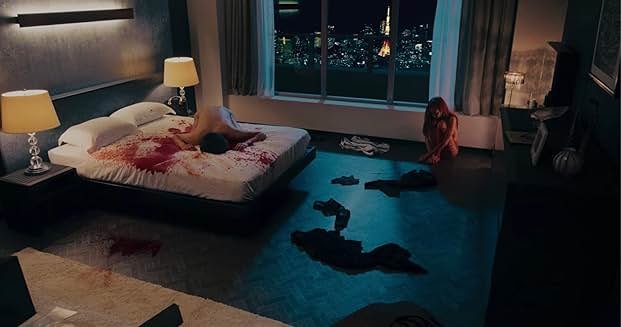
One of the most striking directorial decisions Hiroki makes is refusing to glamorise the opening act of violence — and equally refusing to condemn it. When Rei kills Nanae’s abusive husband, Hiroki shoots the scene with a cold, almost clinical detachment. There is no swelling music, no slow motion, no cinematic heroism. The camera simply watches.
This is entirely intentional. Hiroki understood that if he framed the murder as thrilling, he would be making a different film entirely — one about vengeance. Instead, by stripping the violence of spectacle, he forces the audience to sit with an uncomfortable question from the very start: what kind of love compels a person to this? That question drives every single scene that follows.
Slowness as an Artistic Choice
Hiroki is not interested in momentum for its own sake. Where another director might have leaned into the fugitive thriller structure — the chases, the close calls, the escalating danger — Hiroki consistently pulls back. He slows the film down. He lingers.
This is a deeply considered artistic choice. The long takes, the unhurried camera movements, the extended silences between characters — all of it is designed to create a specific kind of pressure. Not the pressure of external threat, but the pressure of two people being forced into closeness before they are ready for what that closeness will reveal. Hiroki understands that emotional truth accumulates slowly, the way real feeling does in real life, and he builds his film accordingly.
The Camera as an Intimate Witness
Hiroki and his cinematographer Tadashi Kuwabara approach the film’s intimate scenes with a visual language that sets them apart from almost anything in mainstream Japanese cinema. The extreme close-ups — eyes, hands, the curve of a shoulder — are not voyeuristic. They are tender. The camera doesn’t observe these women from a distance. It gets close enough to feel their breath.
This distinction matters enormously. Hiroki was acutely aware of the risk of a male director filming queer female intimacy — the danger of it becoming spectacle, something performed for an imagined male gaze. His answer to that risk was to make the camera a witness rather than a watcher. The lens feels present in these scenes the way a trusted friend might be present — close, quiet, and not there to judge.
Moral Ambiguity as a Form of Respect
Perhaps the most powerful expression of Hiroki’s directorial vision is what he refuses to do at the end of the film. He refuses to resolve these women into clear moral categories. Rei is not punished for her crime, nor is she redeemed by it. Nanae is not saved by love, nor destroyed by it. The film ends in a place that is genuinely open — not as a narrative weakness, but as a profound act of respect for the complexity of the characters he has built.
Hiroki seems to believe that tidying up a story like this — forcing it toward either tragedy or triumph — would be a form of dishonesty. Real lives, and real love, do not resolve themselves so cleanly. By holding that ambiguity all the way to the final image, he honours both the characters and the audience.
A Vision Rooted in Empathy
Ultimately, what makes Hiroki’s direction of Ride or Die so remarkable is not any single technical decision but the underlying quality that drives all of them — empathy. Every choice, from the pacing to the framing to the soundtrack selections, comes from a place of genuine care for who these two women are and what they are carrying.
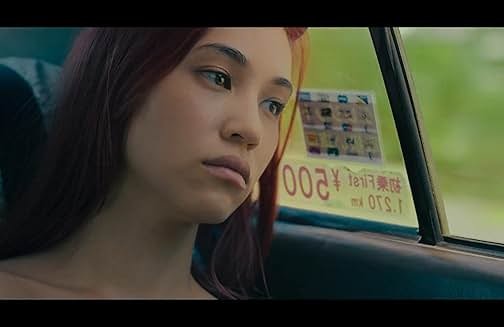
In a film landscape that too often treats marginalised stories as either trauma spectacle or feel-good redemption, Hiroki carves out something rarer and more valuable — a space where two complicated, flawed, deeply human women are simply allowed to exist in all their contradiction.
That, in the end, is his vision. And it is a quietly extraordinary one.