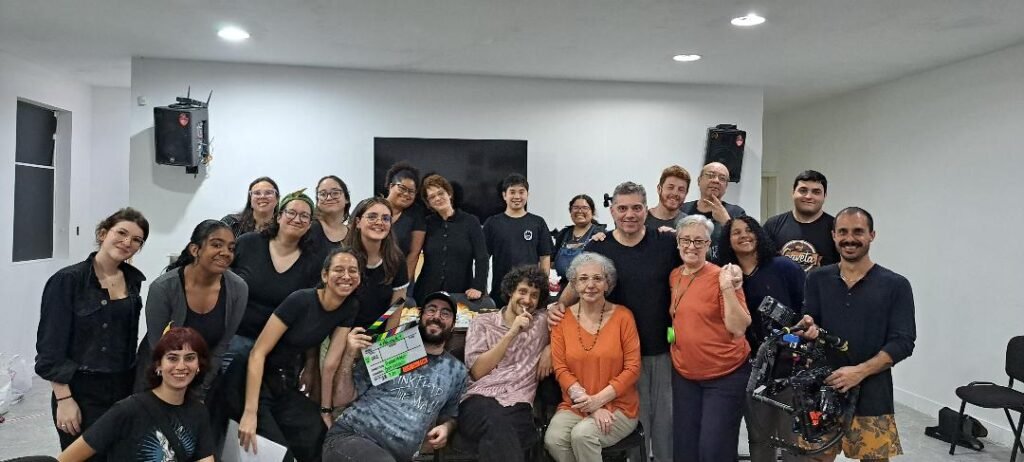
1. How did you first become involved with Hannah, and what drew you to the story Thomas wanted to tell?
Marcio: I met Thomas through other young filmmakers, and when he presented the story to me, I thought it could be told from a different angle, which inspired me to produce this short film.
2. The film deals with grief in a subtle and poetic way. As a producer, how did you help shape the tone and emotional pacing of the project?
I have a different way of working than many Brazilian producers because I studied and graduated in Hollywood, where I lived for over 20 years. Because of this, I always want the project I’m producing to reach the widest possible audience, instead of just telling a regional story. Everyone has struggled or will struggle at some point, and with that, the film ends up being universal, and people start to identify with it. In our film, many scripts were presented, and Thomas and I adjusted them to create an interesting film. The first cut of the film was practically twice the size, and the film was edited to achieve the dramatic story with touches of suspense that was always the director’s idea.
3. What was your biggest challenge in bringing Hannah from concept to completion?
Without a doubt, the film’s budget was a challenge, as we had very little to make it, and the weather was constantly changing, requiring great caution to ensure nothing important was missed. We filmed in a forest park with rare plant and animal species, which meant, me as a producer, gathered as many special filming certifications and permits, in addition to having limited time with the child actors due to our actors’ union (when working with minors, there are many rules to follow). But I believe our planning was well executed, and the film is of very good quality…
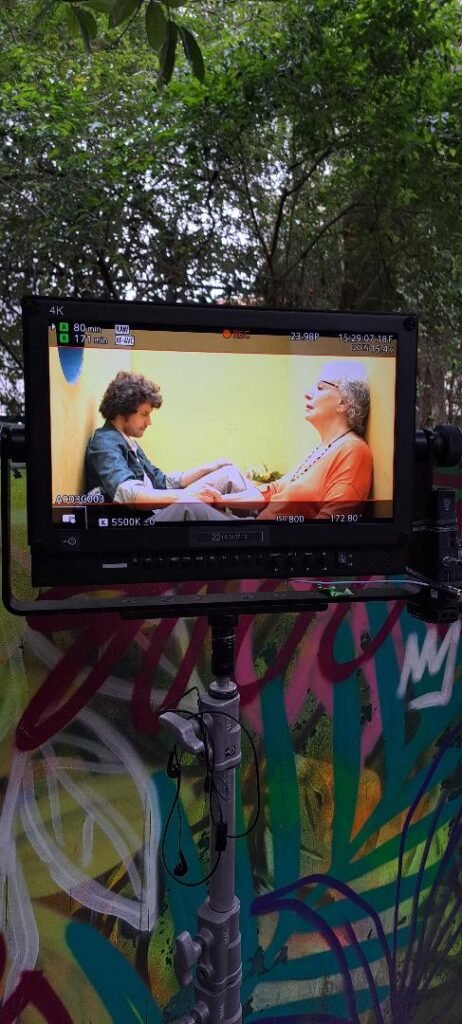
4. How would you describe your collaboration with Thomas Mehler — what do you think each of you brought to the film creatively?
Without a doubt, Thomas brought freshness and ideas (however crazy and wonderful they were), he’s a director who listens to the producer. Because of that, I had complete freedom to create a production design suitable for our shoot, and everything worked out very well. I can’t work with directors who have egos bigger than their heads; that’s very old-fashioned. That’s why working with young directors fascinates me more…
5. The visual style of Hannah is striking. How involved were you in guiding the aesthetic or supporting the cinematographic choices?
Absolutely, throughout the entire planning process, we had many meetings with our DOP and his team and He always made it very clear what he wanted to do. From our first location scout, everything was clear and I was always comfortable and pleased with the photography team’s work.
6. As a Brazilian filmmaker, how do you see contemporary Brazilian cinema evolving, especially among younger storytellers?
We are just beginning to produce more and better quality films. We had a horrible period of dictatorship where they tried to hide our cinema. We still have a lot to grow, and I believe our biggest flaw (if I can use that word) is that we need to improve our screenplays (not the stories themselves), but how they are written and scripted. We have fantastic actors and a top-quality crew, and I believe we are on the right track. Hollywood makes 500 films a year to get 10 or 15 right? So I think we’re doing very well.
7. Finally, what does it mean to you to have Hannah screened at Kyoto Cinematica 2025?
I believe that being able to show our film on the other side of the world allows our story to be seen by a culturally different audience, but one with the same eagerness and desire to consume good quality cinema, thanks to the excellent curation of the festival.
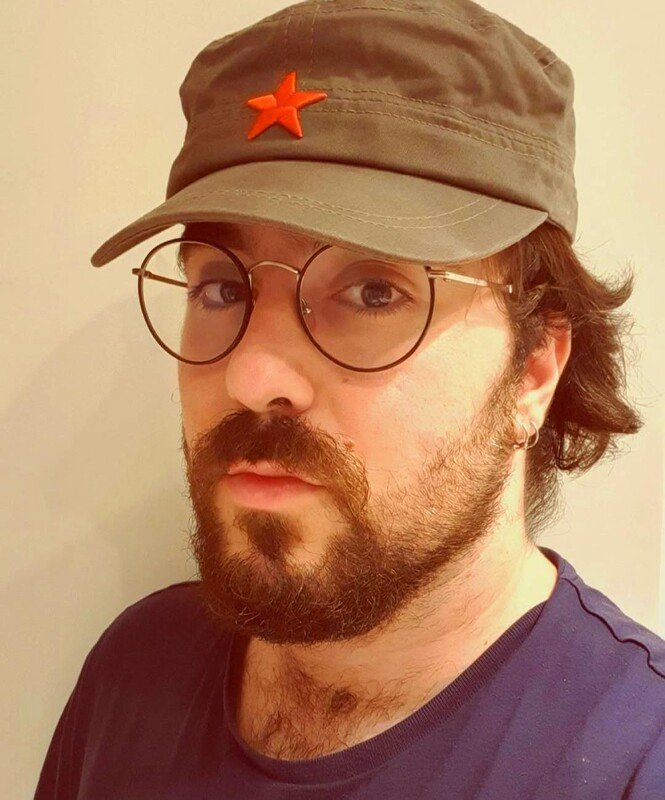
1. Hannah explores the theme of grief in a very intimate way. What was the first image or idea that inspired you to make this film?
Thomas: The first idea of a script was written in 2021, it had a lot of changes through the years. But the first image that I thought was a person drowning in a pitch black landscape. And after that, I started writing about grief.
2.The film seems deeply emotional. Was it based on a personal experience, or did you approach it from observation and empathy?
It wasn’t based on a specific event. Even though Hannah explores the guilt and trauma that grief causes, it was a very distinct loss than the one I experienced. That’s kind of part of the experience, you feel guilt for countless reasons.
3.The cinematography has a quiet power. How did your background as a director of photography influence the way Hannah was shot?
Well, I had a vision of Hannah that it was personal. I wanted to create two worlds for the short picture: past and present. We changed the look of the movie by using different camera movements and different lenses. Boni, my cinematographer, turned this vision into reality, as he could see the script right through its scars.
4.What was the most challenging moment during production, and how did your team overcome it?
The production had many challenges, but I can say the first day was dense. We started the movie from the end to the start, and the final scene demanded a state of mind of which I’ve struggled to reach while writing the script. However, after the first day, the rest was kind of easy. The film was very well planned by my producer.
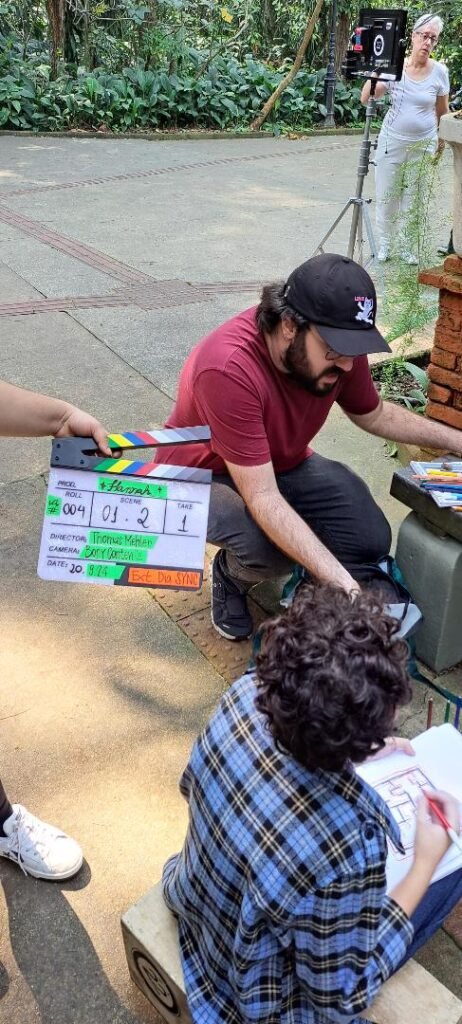
5.As someone passionate about both horror and documentary genres, did either of those sensibilities influence Hannah in tone or structure?
They did. For instance, there are elements of horror in Hannah, like how Lua gets delusional right after he goes to work. The idea was to put the grief in the same scale of fear, and how it consumes us. In the case of the documentary genre, I wanted Hannah to feel as real as it gets. The film is mostly handheld and the camera is always following the actors.
6. You’ve worked across several visual mediums — fashion films, live shows, and documentaries. How did these experiences shape your approach to narrative filmmaking?
After working in the camera department in different environments and films, you start imagining how the image you take can give a lot of information. I believe every single work I’ve done until the production of Hannah, was useful in a very specific way, like learning how you approach yourself from what you’re filming, and how you manage time on set to complete the schedule.
7.You said the film tries to evoke “what we feel in grief.” What do you hope audiences carry with them after watching Hannah?
I hope this film brings some kind of comfort for people who are trying to come into terms with the loss of someone. This is the feeling that unites us, that makes us emotional and changes how you see life afterwards. Hannah was created to free ourselves from the guilt that grief gives us.
8.What’s one lesson Hannah taught you — as a filmmaker and as a person?
I think the most important thing I learned from this fifteen minute movie is that dreams can come true. It takes a lot, but they do. I don’t know how to express the joy of my friends calling me after watching Hannah and going crazy about it. Until now, we have a total of 28 awards around the world, which I’m truly grateful for.